

The harsh reality is that financial emergencies are not a matter of 'if', but 'when'. From unexpected medical expenses to sudden job losses, having an emergency fund can be the difference between a minor hiccup and a financial crisis. Let's look into why an emergency fund is essential and how you can build one effectively.
The Importance of an Emergency Fund
An emergency fund is essentially a financial safety net designed to cover unexpected expenses without derailing your regular budget or forcing you into debt. It provides peace of mind, knowing you're prepared for life's unforeseen events. It also offers financial stability, allowing you to tackle emergencies without compromising your long-term financial goals.
How Much Should You Save?
The size of your emergency fund can vary based on your lifestyle, monthly expenses, income stability, and family size. A general rule of thumb is to save enough to cover three to six months' worth of living expenses. This can include rent or mortgage payments, food, utilities, insurance, and any other essential costs.
Tips for Building Your Emergency Fund
-
Start Small, Think Big: If saving several months' worth of expenses seems daunting, start small. Even a modest emergency fund can provide valuable financial security. Aim for a short-term goal of $500 or $1,000, then gradually increase your target.
-
Make It a Budget Line Item: Treat your emergency fund like a recurring expense. Include a dedicated category for it in your monthly budget and commit to a regular contribution, just like any other bill.
-
Automate Your Savings: Set up an automatic transfer from your checking account to your emergency fund. Automating the process ensures consistent savings and eliminates the temptation to spend that money elsewhere.
-
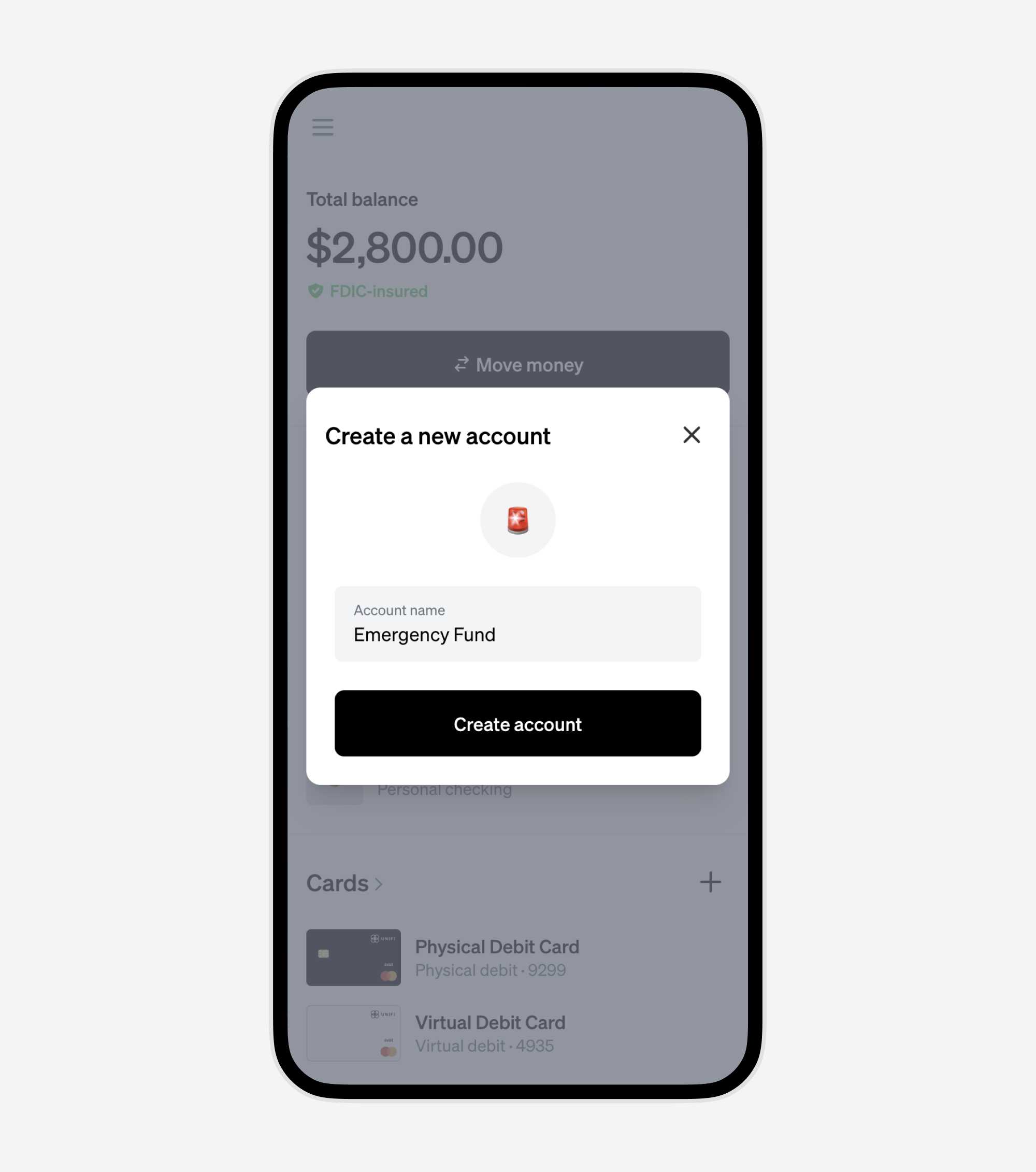
Keep It Accessible, But Separate: Your emergency fund should be easily accessible but separate from your regular checking account. Consider creating a dedicated account within UniFi named "Emergency Fund", "Rainy Day Fund", or similar.
-
Adjust as Your Life Changes: As your expenses, income, or family situation changes, reevaluate your emergency fund. Periodically assess if you need to save more to align with your current living expenses.
-
Use Windfalls Wisely: Tax refunds, bonuses, or any unexpected income can be a great way to boost your emergency fund. Resist the urge to splurge and allocate a portion of this windfall to your safety net.
-
Cut Back on Non-Essentials: Review your spending habits and identify areas where you can cut back. Even small reductions in discretionary spending can add up over time and contribute significantly to your emergency fund.
Conclusion
Life is full of uncertainties. An emergency fund helps you handle those uncertainties gracefully. It's not just about saving money. It's about making life less stressful. Start building your emergency fund today – no matter how small – and take a big step towards financial peace of mind.